Insights
Buying Guide: Technology for Government and Defense Contractors (FedRAMP, GCC, CMMC)
FedRAMP, GCC High and CMMC decide which vendors government and defense buyers can use. How to check, what the CMMC pause means, and where to start.
Government agencies and defense contractors can't buy technology the way everyone else does. Before price or features, one question narrows the field: which vendors are you allowed to use for the data you handle? Public data, controlled unclassified information (CUI) and export-controlled data each come with their own rules, and a vendor that doesn't meet them can cost you the contract.
This guide is for CIOs, CISOs and procurement leaders at state and local agencies, and at companies that hold or pursue federal and defense contracts. It isn't legal or compliance advice; your contracts and your compliance advisor have the final word.
First, the terms
- FedRAMP (Federal Risk and Authorization Management Program): the U.S. government program that checks and authorizes cloud services for federal use. Authorization is given per product, at Low, Moderate or High levels.
- CUI (controlled unclassified information): government information that isn't classified but must still be protected, such as technical drawings or contract details.
- ITAR (International Traffic in Arms Regulations) and EAR (Export Administration Regulations): U.S. export rules for defense and dual-use technology and data. They limit who, and which countries, can access it.
- CMMC (Cybersecurity Maturity Model Certification): the Department of Defense program that checks whether contractors protect CUI. Level 1 is basic, Level 2 is the main standard for CUI, and Level 3 is for the most sensitive programs.
- DFARS (Defense Federal Acquisition Regulation Supplement): the Defense Department's contract rules. Clause 252.204-7012 requires contractors to protect CUI and report cyber incidents.
- C3PAO (CMMC Third-Party Assessment Organization): an approved outside firm that audits contractors for CMMC Level 2.
- NIST SP 800-171: the federal security standard that CMMC Level 2 is based on.
- GCC (Government Community Cloud), GCC High and DoD: Microsoft's separate government versions of Microsoft 365, explained below.
- Flow-down clause: a requirement in a prime contractor's contract that it must pass on to its subcontractors and vendors.
- Shared responsibility matrix: a document from a vendor showing which security controls it handles, which you handle, and which are shared.
Where CMMC stands today
- The rules are in force. The DFARS rule that makes CMMC a contract requirement took effect November 10, 2025. (McDermott Will & Schulte)
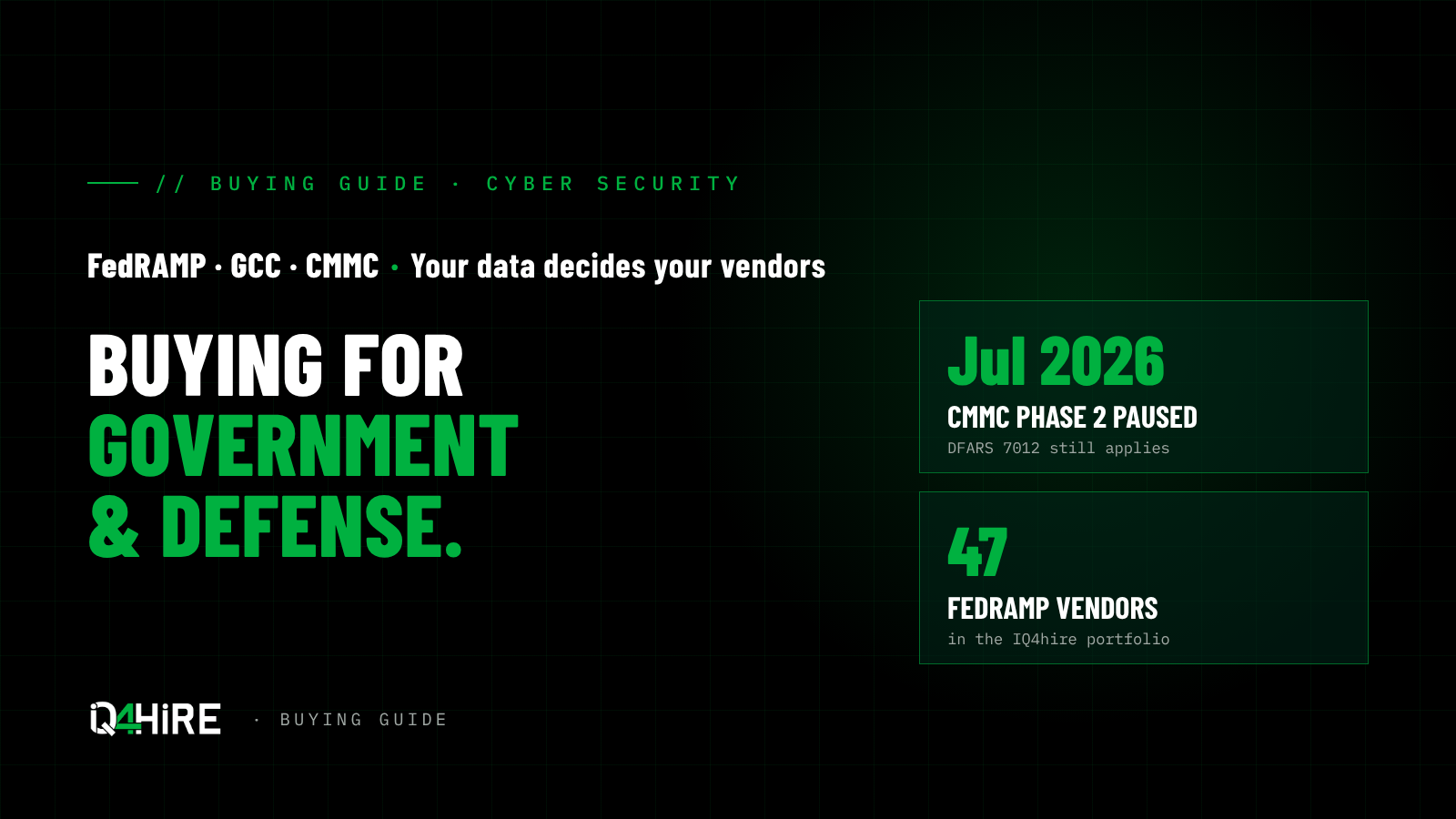
- Phase 2 is paused. On July 13, 2026, the Department of War suspended CMMC Phase 2, which was scheduled for November 10, 2026. (DoD CIO)
- The obligations didn't go away. The pause doesn't remove the requirement to protect information under DFARS 252.204-7012, and Phase 1 self-assessments remain in place. (DoD CIO, McDermott Will & Schulte)
Our view: treat the pause as more time to get ready, not as a reason to stop. Plan as if third-party Level 2 assessments are coming.
Microsoft's government clouds
Microsoft runs separate environments for government work. They are not just higher price tiers; you have to qualify for them.
| Environment | Who it's for | Key point |
|---|---|---|
| GCC | State, local and federal civilian agencies, and some contractors | Government community cloud; most features of commercial Microsoft 365 |
| GCC High | Defense contractors and others handling CUI or ITAR/EAR data | Supports ITAR and DFARS 252.204-7012; features can lag commercial |
| DoD | Department of Defense organizations only | Not available to contractors |
Microsoft validates eligibility before it sets up GCC or GCC High. (Microsoft Learn, Redress Compliance) Expect longer lead times, and expect some features, including parts of Copilot, to arrive later in GCC High. (Agency)
GCC High isn't required by CMMC alone; it's driven by what data you hold and what your contracts say. Confirm with your compliance advisor before you migrate.
Five things to check with every vendor
- Which offering is authorized. A vendor can hold FedRAMP authorization for one product and not another. Ask which service, at what level, and check it on the FedRAMP Marketplace.
- Where your data lives and who touches it. U.S. data centers, and whether support staff are screened U.S. persons.
- What the contract says. Will they sign the flow-down clauses your prime or agency requires, and support incident reporting?
- Which controls they cover. Ask for a shared responsibility matrix: what they handle, what's shared, and what stays with you.
- Feature gaps. Government versions often trail commercial ones. Confirm the features you need exist in the version you'd buy.
Vendors to look at
IQ4hire's portfolio includes 47 vendors that list FedRAMP-authorized offerings, across 19 categories. A sample by need:
| Need | Vendors to look at |
|---|---|
| Cybersecurity and managed detection | CyberMaxx, eSentire, LevelBlue, Cytellix, Appgate |
| Compliance and advisory | Cytellix, CyberMaxx, Effectual, Blue Mantis, eSentire |
| Cloud, colocation and disaster recovery | DataBank, Equinix, TierPoint, Rackspace, Effectual |
| Contact center | NICE CXone, Talkdesk, Content Guru, UJET, RingCentral |
| Phones and collaboration | Zoom, RingCentral, Nextiva, CallTower, Avaya |
| Network and connectivity | AT&T, Verizon, Lumen, Megaport, Akamai |
Inclusion here means the vendor lists a FedRAMP offering; it doesn't mean every product they sell is authorized. We confirm the specific offering and level for your use before we bring a vendor to you.
Traps
- Buying the commercial version by mistake. The same brand name can cover authorized and non-authorized products.
- Moving to GCC High when you don't need it. It costs more and lags on features. Let your data and contracts decide.
- Staying in commercial Microsoft 365 when you do need GCC High. Moving later means a migration, not a license switch.
- Treating the CMMC pause as a reprieve. DFARS 7012 obligations still apply.
- Letting the vendor define compliance. A FedRAMP-authorized cloud doesn't make you compliant; it covers part of the controls.
Questions to ask before you buy
- What types of data will this system hold: public, CUI, ITAR/EAR?
- Which offering and authorization level does the vendor hold, and can we see it on the FedRAMP Marketplace?
- Which clauses will they accept in our contract, including flow-downs?
- What is their shared responsibility matrix?
- Which features are missing from the government version?
- How long will eligibility checks and provisioning take?
How IQ4hire helps
We start with your contracts and your data, not a vendor's catalog. Then we bring you vendors whose authorized offerings fit, confirm the authorization for your specific use, and compare them side by side. For Microsoft government licensing, we work through Channel Exchange (part of ScanSource) and confirm availability and eligibility for the environment you need before quoting. No RFP, and no cost to you.
Sources
- DoD CIO, About CMMC
- McDermott Will & Schulte, CMMC Phase 2 suspension client alert
- Microsoft Learn, Microsoft 365 Government: how to buy
- Redress Compliance, Microsoft 365 GCC, GCC High and DoD licensing
- Agency, Microsoft GCC vs GCC High
- FedRAMP, Marketplace